
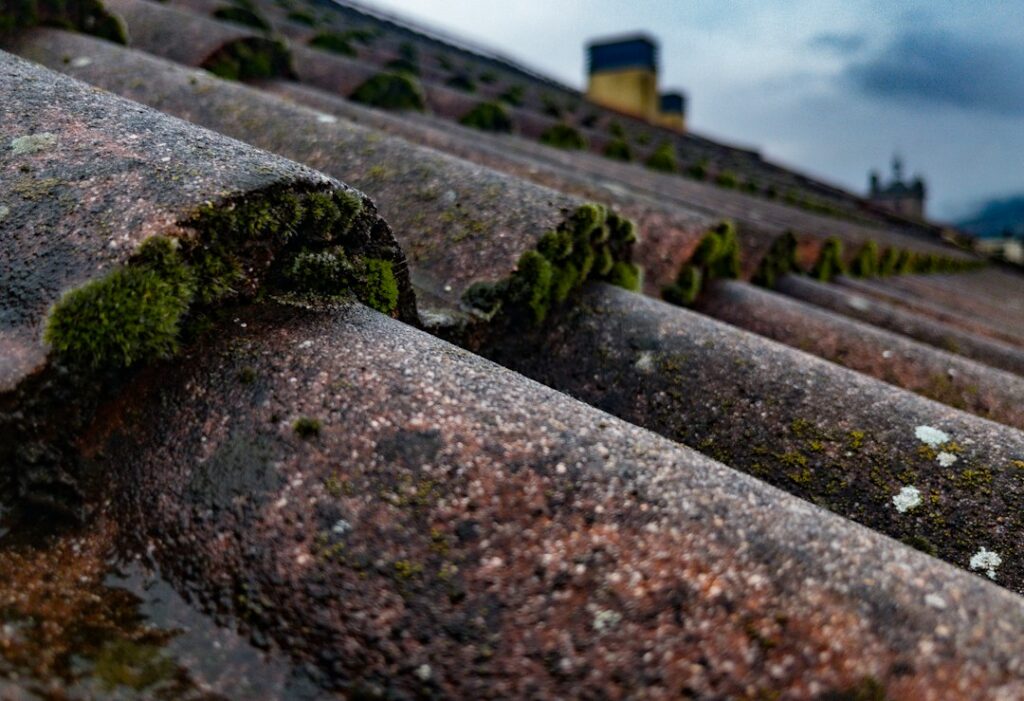
Roof discoloration is common, but dark or green patches should not be dismissed automatically. Mold, mildew, algae, moss, dirt, and weathering can look similar from the ground, yet each condition behaves differently and may require a different response.
What does mold or mildew look like on a roof?
Mold and mildew usually appear as irregular stains, blotches, or surface growth rather than a uniform change in shingle color. They may be black, gray, green, brown, or pale white, depending on the organism and how long it has been present.
Common visual clues include:
- Dark spots or spreading patches on shingles
- Greenish or gray film in shaded areas
- Fuzzy, powdery, or slightly raised growth
- Discoloration that follows roof valleys or areas where water drains slowly
- Staining beneath overhanging branches
- Growth near clogged gutters, downspouts, or roof edges
From the ground, mold and mildew can be difficult to identify with certainty. A pair of binoculars can help reveal texture without requiring anyone to climb onto the roof.
How can mold, mildew, algae, moss, and dirt be told apart?
These roof conditions are often confused, but their appearances and effects are different.
Mold is a fungus that may look fuzzy, blotchy, or powder-like. It tends to develop where moisture remains trapped and may be associated with organic debris.
Mildew is also fungal growth, but it is often flatter and lighter in color. White, gray, or pale green patches may be mildew, especially where the roof stays damp and shaded.
Algae commonly creates blue-green, gray, or black streaks that run downward with rainwater. Algae staining is widespread on many asphalt-shingle roofs and does not always mean the shingles are structurally damaged.
Moss is thicker and more three-dimensional. It may look like a green carpet or soft clumps and can lift shingle edges as it spreads.
Dirt and soot usually form a more even coating or collect in predictable lines. They generally lack the fuzzy or raised texture associated with biological growth.
A roof can have more than one problem at the same time. For example, algae staining may cover the shingles while moss grows along a shaded edge.
Why do roofs in Clayton, NY develop biological growth?
Moisture and limited sunlight are the main conditions that support mold, mildew, algae, and moss. Seasonal weather in Clayton, NY can create repeated wetting and drying cycles, while tree cover, shade, rain, snow, and leaf debris may keep parts of a roof damp for extended periods.
Growth is more likely where:
- Trees shade the roof for much of the day
- Leaves, needles, or twigs collect on the shingles
- Gutters overflow or remain clogged
- Roof valleys hold organic debris
- Nearby branches touch or scrape the roof
- Ventilation is poor beneath the roof surface
- Snow and ice remain in shaded areas
- Water drains slowly around roof penetrations or edges
A north-facing roof slope or a section shaded by mature trees may show more growth than a sunnier slope on the same house. This does not necessarily indicate that the entire roof has failed or that every roof surface needs treatment.
Can roof mold or mildew cause leaks?
Mold and mildew alone do not always create an immediate leak, but the conditions that support growth can contribute to roof problems. Persistent moisture may weaken exposed materials, encourage decay in wood components, and make existing defects harder to notice.
Moss presents a more direct concern because it can grow beneath shingle edges. As shingles lift or separate, wind-driven rain may enter beneath them. Debris trapped under moss can also slow drainage and keep the roof surface wet.
Dark algae streaks are usually more cosmetic than structural. However, widespread staining should still prompt a closer look for missing granules, curling shingles, exposed fasteners, damaged flashing, or areas where water is not draining correctly.
How can someone inspect a roof safely from the ground?
A ground-level inspection is the safest first step. Look at the roof from several sides of the property during daylight, using binoculars if needed. Pay attention to changes in color, texture, and shingle alignment.
Useful observations include:
- Whether staining is limited to one shaded slope
- Whether growth is flat, fuzzy, or raised
- Whether shingles are curling, cracked, buckled, or missing
- Whether gutters contain heavy organic buildup
- Whether branches rest on or touch the roof
- Whether water stains appear on exterior walls, soffits, or ceilings
- Whether the same area remains dark after several dry days

Roof surfaces can be slippery even when they appear dry. Wet shingles, frost, algae, moss, and loose granules increase the risk of falling. Walking on the roof can also damage aging shingles, so ground-level observation is preferable for routine checking.
What should be done if mold or mildew is found?
The response depends on the type and extent of growth. Light surface staining may not require immediate roof replacement. Removing nearby debris, improving drainage, and reducing unnecessary shade can help limit moisture.
Avoid aggressive scrubbing, pressure washing, or scraping shingles. These actions can remove protective granules, loosen shingle edges, and force water beneath the roofing material. Household bleach or strong cleaning chemicals can also damage plants, metal components, painted surfaces, and roofing materials if used improperly.
If cleaning is appropriate, the method should be compatible with the specific roofing material and applied without damaging the shingles. The roof should also be evaluated for the moisture source, rather than treating only the visible stain.
Moss that has lifted shingles, growth covering a large area, visible water entry, or suspected damage beneath the roof surface warrants a closer inspection by someone qualified to assess roof safety and materials. Climbing onto a roof may be especially hazardous during freezing weather, after rain, or on steep slopes.
Is black roof staining always mold?
No. Black streaks are often caused by algae rather than mold. The streaks may follow the path of rainwater and appear on the lower portions of shingles. Their presence does not automatically mean there is indoor mold, contaminated insulation, or a serious structural problem.
A roof surface cannot be reliably identified by color alone. Texture, location, moisture patterns, roof age, and signs of shingle damage all matter. Indoor mold concerns are a separate issue and usually involve persistent moisture inside the building, such as a roof leak, condensation, plumbing problem, or inadequate ventilation.
When is roof growth a warning sign?
Biological growth deserves prompt attention when it appears with other signs of roof deterioration. Warning signs include:
- Water stains on ceilings or upper walls
- Damp attic insulation or roof framing
- Shingles that are lifted, brittle, curled, or missing
- Sagging roof sections
- Persistent musty odors indoors
- Repeated gutter overflow
- Moss growing beneath shingle edges
- Growth returning quickly after cleaning
- Wood decay around roof edges or penetrations
In Clayton, seasonal freeze-thaw conditions can make small weaknesses more significant over time. Water that enters a small opening may freeze, expand, and enlarge the damaged area. A roof that looks merely discolored from the ground may therefore deserve closer attention if staining is paired with physical deterioration.
How can future growth be reduced?
Keeping the roof reasonably clear of organic debris is often more useful than repeatedly treating the visible stain. Gutters and downspouts should allow water to move freely, and branches should not rest on the shingles or block sunlight unnecessarily.
Adequate attic ventilation also matters. Warm, moist air that becomes trapped beneath the roof can contribute to condensation during cold weather. Signs of inadequate ventilation may include damp insulation, frost in the attic, peeling surfaces, or moisture around roof framing.
Regular visual checks in spring and fall can reveal changes before they become urgent. After major wind, heavy snow, or extended wet weather, it is sensible to look for displaced shingles, blocked drainage, and new interior staining. The goal is not to eliminate every naturally occurring mark, but to distinguish harmless discoloration from growth or moisture conditions that may damage the roof.
