
![Homeowner examining roof shingles and attic rafters with a flashlight and inspection checklist KEYWORDS: ["roof inspection", "homeowner attic inspection", "roof shingles and gutters"]](https://roofingexpertinclaytonny.org/wp-content/uploads/sites/7889/2026/09/clayton-ny-homeowner-s-guide-to-roof-inspections-1024x683.jpg)
What does a roof inspection actually involve?
A roof inspection is a systematic review of the roof’s visible condition, drainage system, ventilation, flashing, and related attic areas. It is more than looking for missing shingles from the ground.
A careful inspection typically considers:
- Shingles or other roof coverings
- Ridge caps, valleys, and roof edges
- Flashing around chimneys, vents, skylights, and wall intersections
- Gutters, downspouts, and roof drainage
- Signs of water entry in the attic or upper ceilings
- Ventilation and moisture conditions
- Evidence of storm, ice, wind, or installation-related damage
The purpose is to identify current defects, recognize developing problems, and determine whether ordinary maintenance may extend the roof’s useful life.
How often should a homeowner inspect a roof?
Most homeowners should perform a basic visual check twice a year—typically in spring and fall—and after severe weather. A more detailed inspection may be appropriate when buying or selling a home, after a leak, or when the roof is approaching the later part of its expected service life.
Seasonal inspections are especially useful in Clayton, where roofs may experience snow accumulation, freezing and thawing, strong winds, heavy rain, and falling branches. Winter conditions can conceal damage, so spring is a useful time to look for problems that developed under snow or ice.
A homeowner does not need to climb onto the roof for every inspection. Ground-level observations, attic checks, and inspection from a ladder positioned safely at the roof edge can reveal many warning signs.
What should be checked from the ground?
A ground-level review can identify changes that deserve closer attention. Use binoculars if necessary rather than walking on a steep or wet roof.
Look for:
- Shingles that are missing, lifted, cracked, curled, blistered, or visibly worn
- Dark patches that may indicate moisture or algae growth
- Uneven areas or sagging lines in the roof surface
- Exposed underlayment or bare roof decking
- Loose or damaged flashing
- Granules collecting in gutters or near downspouts
- Gutters pulling away from the fascia
- Tree limbs resting on or touching the roof
- Debris collecting in valleys or behind roof features
Not every dark mark means the roof is leaking, and not every missing granule indicates immediate failure. The significance depends on the location, extent, age of the roof, and whether water is reaching the building interior.
What should homeowners look for in the attic?
The attic often provides some of the clearest evidence of roof performance. Inspect during daylight if possible, using a flashlight to examine areas around roof penetrations and the underside of the roof deck.
Signs that warrant attention include:
- Damp or discolored wood
- Water stains, especially below valleys, vents, or chimneys
- Mold-like growth or persistent musty odors
- Rusted nails or fasteners
- Wet insulation or compressed insulation
- Daylight visible through the roof deck outside of intentional vents
- Frost or condensation on the underside of the roof during cold weather
- Sagging sheathing or roof framing
A roof leak does not always appear directly beneath the exterior defect. Water can travel along rafters, trusses, insulation, or roof decking before becoming visible on a ceiling. For that reason, the location of an interior stain may not identify the exact source.
Condensation can also be mistaken for a roof leak. Poor attic ventilation, air leakage from the living space, and high indoor humidity may create moisture even when the exterior roof covering is intact.
Which roof details are most likely to cause trouble?
Roof penetrations and transitions deserve particular attention because they interrupt the continuous surface of the roof. Common problem areas include chimneys, plumbing vents, skylights, dormers, wall intersections, and valleys.
Flashing should lie flat and appear securely integrated with the surrounding materials. Gaps, lifted edges, corrosion, cracked sealant, or exposed fasteners can allow water to enter.
Valleys carry water from two roof slopes and may collect leaves, ice, and windblown debris. A valley that remains clogged can drain poorly and may be more vulnerable during heavy rain.
Roof edges also matter. Damaged fascia, loose drip-edge material, or overflowing gutters can allow water to reach the roof deck, exterior walls, or attic rather than flowing safely into the drainage system.
How do gutters and downspouts affect roof condition?
Gutters are part of the roof drainage system, so their condition should be included in a roof inspection. Blocked or poorly aligned gutters can cause water to back up beneath roof edges or spill onto siding and foundation areas.
Check whether:
- Gutters are securely attached and maintain a consistent slope
- Downspouts discharge water away from the foundation
- Seams and end caps show leakage
- Ice or snow has bent the gutter system
- Leaves and roof granules are accumulating heavily
- Water stains appear below the eaves
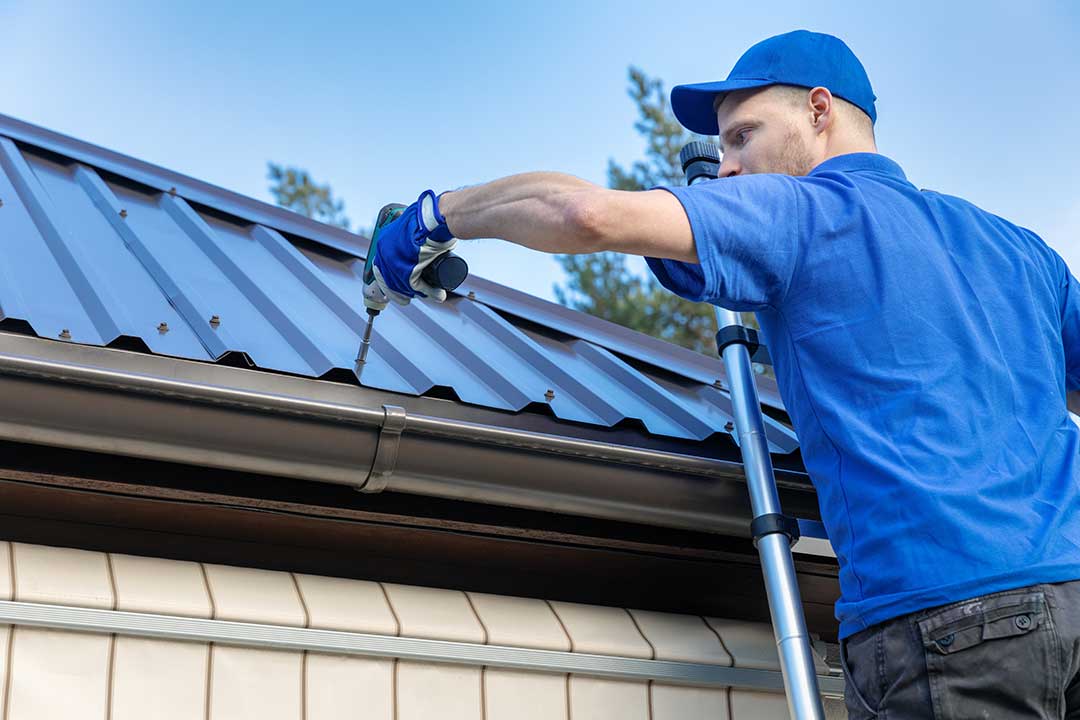
In areas with substantial winter weather, ice buildup can distort gutters and create heavy loads along roof edges. Clearing debris before freezing conditions arrive can reduce, though not eliminate, drainage problems.
Can a homeowner inspect a roof safely?
Many basic observations can be made without climbing onto the roof. Walking on a roof introduces fall hazards and can damage brittle shingles, loosen granules, or break materials that appear sound from the ground.
Avoid roof access during:
- Rain, frost, snow, or ice
- Strong winds
- Hot conditions that soften roofing materials
- Steep or unfamiliar roof layouts
- Any situation requiring unstable ladder placement
Never use a ladder near overhead electrical lines. A ladder should rest on stable, level ground and extend above the roof edge when roof access is unavoidable. If the roof is steep, high, damaged, or difficult to reach safely, a qualified inspector may be necessary because safety takes priority over a homeowner’s visual review.
What should happen after a storm?
After high winds, hail, heavy snow, or falling branches, inspect the property from the ground and check the attic when conditions are safe. Look for displaced shingles, damaged flashing, exposed decking, dents in metal components, broken branches, and new interior stains.
A leak may not appear immediately. Water can enter through a small opening and remain unnoticed until the next rain or until insulation becomes saturated. New ceiling discoloration, peeling paint, damp insulation, or a musty odor should be documented and investigated promptly.
Photographs taken from safe locations can help track changes over time. Record the approximate date, weather conditions, affected room, and any visible exterior damage.
When does a roof need more than routine maintenance?
Some conditions suggest that a detailed evaluation is warranted rather than simple cleaning or minor upkeep:
- Repeated leaks in the same area
- Widespread shingle loss or deterioration
- Sagging roof planes
- Significant damage after a storm
- Rotting or soft roof decking
- Persistent attic moisture
- Flashing failures around several roof penetrations
- A roof that is near or beyond its expected service life
A single damaged shingle does not automatically mean the entire roof must be replaced. Conversely, a roof that looks acceptable from the ground may have concealed deck, flashing, or ventilation problems. Decisions should be based on the pattern and severity of findings, not on age alone.
For hazardous conditions, structural concerns, or active leaks near electrical components, a qualified roofing or building professional may be needed to evaluate the problem safely. Local building requirements may also apply when repairs involve structural work, reroofing, ventilation changes, or alterations to roof penetrations.
What records should a homeowner keep?
Maintain a simple roof file with inspection dates, photographs, repair information, material details, and notes about storms or leaks. Include attic observations and gutter maintenance as well.
Good records help distinguish a new problem from an old stain, show whether a defect is recurring, and provide useful background when the home is sold or when future repairs are planned. A written inspection summary should identify observed conditions, areas that were inaccessible, and any recommended follow-up rather than using only a general statement that the roof is “good” or “bad.”
IMAGE_ALT:
Homeowner examining roof shingles and attic rafters with a flashlight and inspection checklist
