
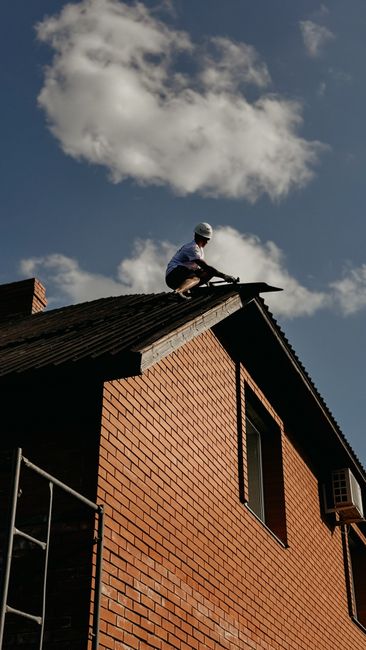
Roof maintenance is mostly a matter of early detection. For households in Clayton, NY, regular checks can help identify loose shingles, blocked drainage, ice-dam conditions, and moisture problems before they become interior damage.
A safe maintenance routine does not require walking on the roof. Most useful inspections can be completed from the ground, from a ladder positioned at the gutter edge, or from inside the attic. Roof work should stop whenever conditions are icy, wet, windy, steep, or otherwise unsafe.
What should homeowners check in spring?
Spring is a good time to look for damage caused by snow, ice, wind, and repeated freezing and thawing. Start with a ground-level inspection after the roof is dry.
Look for:
- Missing, cracked, curled, or displaced shingles
- Dark patches or exposed underlayment
- Bent or loose metal around chimneys, vents, skylights, and roof edges
- Sagging areas along the roofline
- Gutter sections that have pulled away from the fascia
- Granules collected below downspouts or in driveway areas
- Tree limbs, moss, or other debris resting on the roof
Do not assume that a roof is undamaged because there is no ceiling stain. Water can travel along roof decking, rafters, and insulation before it becomes visible inside the living space.
Spring is also a useful time to inspect the attic. On a dry day, check for damp insulation, water marks, rusty nails, peeling wood, or a musty smell. Moisture around roof penetrations may point to a flashing problem rather than a shingle problem.
How often should gutters and downspouts be cleaned?
Gutters should be checked at least twice a year and more often when trees shed heavily. In the local climate, leaves, small branches, ice, and windblown debris can restrict drainage and contribute to overflow along the roof edge.
When cleaning gutters:
- Use a stable ladder on firm, level ground.
- Wear gloves because gutter debris may contain sharp metal, insects, or animal waste.
- Remove leaves and sediment by hand or with a small scoop.
- Flush the downspout with a garden hose if it appears blocked.
- Confirm that water exits several feet away from the foundation.
- Check for sagging, separated joints, rust, or loose fasteners.
A gutter guard can reduce debris, but it does not eliminate maintenance. Fine material may still collect on top or pass through the openings. Downspouts should remain clear even when the gutter surface looks clean.
Avoid leaning a ladder against the gutter itself. The weight can bend the gutter or pull it away from the fascia.
What can be done about moss, algae, and roof debris?
Small amounts of surface debris should be removed carefully, but aggressive cleaning can shorten the life of roofing materials. Do not use a pressure washer on shingles. High-pressure water can strip protective granules, force water beneath the roof covering, and damage flashing.
Branches and leaves can often be removed with a soft roof rake or a long-handled tool used from the ground, provided the tool does not scrape the shingles. Moss should not be pulled aggressively because its roots may disturb the roof surface.
Moss is more likely to persist where a roof stays shaded and damp. Nearby branches can be trimmed when they rub against the roof or block air movement, but tree work should not be attempted from a roof or ladder during windy conditions.
Dark streaks are not always structural damage. They may be algae staining, while raised green growth or thick mats are more concerning because they can hold moisture against the roofing material.
How can homeowners find small roof leaks?
The location of an interior stain is not always the location of the roof defect. Water may enter higher up and travel along the underside of the roof deck before dripping into a room.
During an attic inspection, follow the stain uphill toward:
- Roof vents
- Chimneys
- Skylights
- Plumbing vent pipes
- Valleys where roof sections meet
- Areas near the roof edge
- Places where the decking is discolored or softened
A flashlight can help reveal water trails, but touching wet electrical components or wiring is unsafe. Do not enter an attic if the floor is unclear, insulation is unstable, or structural members appear damaged.
Temporary containers may protect floors during a leak, but they do not address the source. A persistent drip, wet insulation, or visibly deteriorated roof decking requires more than routine DIY maintenance.
What should be done before winter?
Before the first lasting freeze, clear gutters and confirm that downspouts drain freely. Check that attic insulation is dry and that ventilation openings are not blocked by insulation or stored items.
Ice dams often develop when heat escapes into the attic and warms portions of the roof while the eaves remain cold. Meltwater can then refreeze near the roof edge and back up beneath the shingles. Poor attic insulation, blocked soffit vents, and uneven roof temperatures can all contribute.
Homeowners can reduce risk by:
- Keeping attic insulation evenly distributed
- Making sure soffit and ridge ventilation paths are not obstructed
- Sealing obvious air leaks around attic penetrations where appropriate
- Removing leaves from valleys and roof drainage areas
- Watching for repeated indoor moisture or winter staining
Do not chop ice dams with a hammer, shovel, or axe. The impact can damage shingles and the roof deck. Avoid climbing onto an icy roof or using heat-producing devices near roofing materials.
Should snow be removed from a roof?
Usually, snow removal from a roof is not a routine DIY task. Snow can become extremely heavy when it is wet, compacted, or mixed with ice. Wind can also create uneven drifts, especially near roof transitions, valleys, dormers, chimneys, and other raised features.
From the ground, watch for:
- New sagging in the roofline
- Doors or windows that suddenly stick
- Cracking sounds from the attic
- Large snow drifts concentrated in one area
- Ceiling movement or fresh interior cracking
- Water entering around roof edges
These signs call for immediate caution. Keep people away from areas below questionable roof sections, and do not climb onto the roof to investigate. Structural concerns, heavy snow accumulation, and ice removal involve hazards that exceed ordinary homeowner maintenance.
Which repairs are reasonable for a careful homeowner?
A homeowner may be able to replace a missing gutter fastener, clear a downspout, remove loose debris from the ground, or document a suspected leak with photographs. Minor caulking work may be appropriate only when the correct material and surface preparation are understood.
Roofing repairs become unsafe or unreliable when they involve steep slopes, damaged decking, widespread shingle loss, flashing replacement, electrical hazards, or walking on a wet or icy surface. A repair should not be attempted simply because the damaged area appears small.
Keep notes after each inspection, including the date, weather conditions, areas checked, and any changes noticed. Photographs taken from the same locations can make it easier to track gradual deterioration.
Regular observation is especially useful for older homes, seasonal properties, and houses exposed to lake-effect weather, strong wind, shade, or frequent freeze-thaw cycles. The goal is not to inspect every detail personally, but to recognize changes early and avoid turning a manageable maintenance issue into a safety or water-damage problem.
