
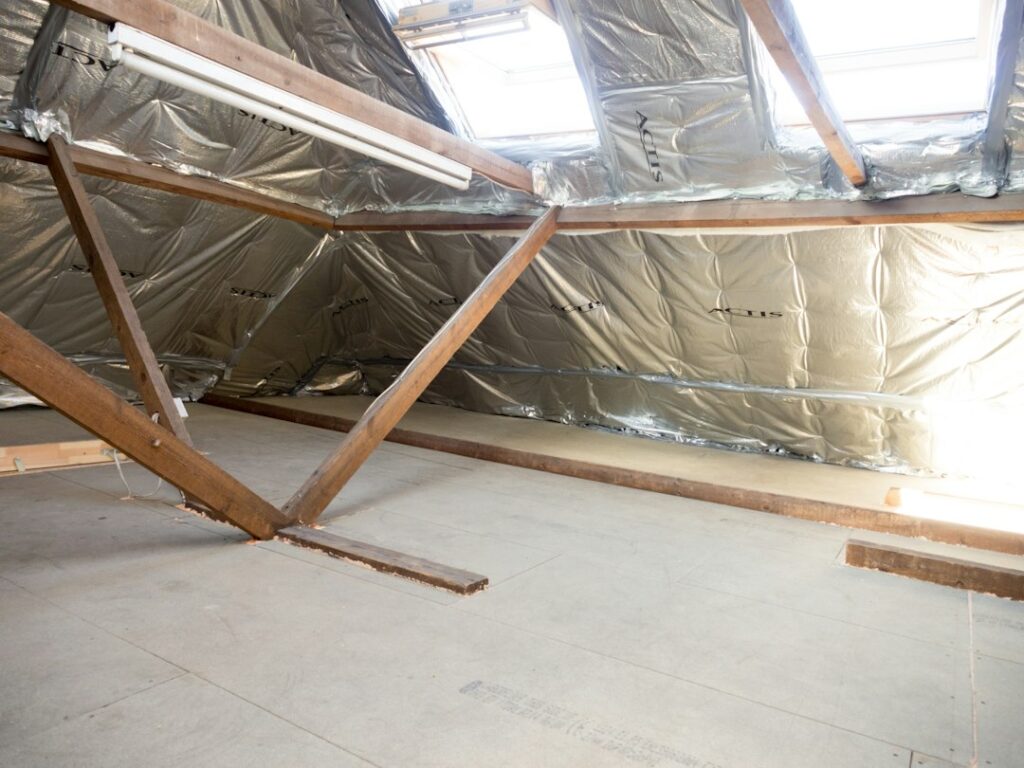
Why does roof ventilation matter in Clayton, NY?
Proper roof ventilation helps control heat and moisture in the space beneath the roof. A balanced system allows outdoor air to enter near the eaves, move through the attic or roof assembly, and exit near the ridge or upper roof area.
This matters in Clayton, NY because homes experience cold winters, snow cover, freeze-and-thaw cycles, humid summers, and significant temperature changes between the living space and outdoors. Those conditions can expose weaknesses in attic insulation, air sealing, and ventilation.
Roof ventilation is not simply about making an attic cooler. Its main purposes are to:
- Reduce moisture accumulation
- Help limit condensation on roof sheathing
- Lower the risk of ice dams
- Protect wood framing and insulation
- Improve the long-term durability of the roof assembly
Ventilation works best as part of a complete system that also includes adequate insulation and careful air sealing.
How does a properly ventilated roof work?
A typical vented attic uses low intake openings and high exhaust openings. Intake ventilation commonly comes through soffit or eave vents. Exhaust ventilation may be provided by a ridge vent, gable vent, or other approved roof vent.
Warm air naturally rises. As warmer attic air leaves through upper vents, outside air can enter through lower vents. This creates a gradual flow of air rather than relying on a single opening or powered fan.
A balanced system requires both intake and exhaust ventilation. Installing an exhaust vent without enough intake air may reduce performance and can draw air from unwanted locations, including gaps around light fixtures, attic hatches, plumbing penetrations, or ceiling cracks.
The exact amount of ventilation depends on roof design, attic size, insulation arrangement, local code requirements, and whether the roof is designed as a vented or unvented assembly. Vent openings should not be judged by their visible size alone because screens, louvers, and internal construction reduce the amount of air that can pass through.
Can roof ventilation help prevent ice dams?
Ventilation can help reduce ice-dam risk, but it does not solve every ice-dam problem by itself. Ice dams form when part of a roof becomes warm enough to melt snow while colder roof edges remain below freezing. Meltwater can refreeze near the eaves and create a barrier that holds additional water against the roof covering.
A properly designed roof assembly helps keep the roof deck at a more consistent temperature. This requires several elements working together:
- Adequate attic insulation
- Air sealing at the ceiling plane
- Clear soffit-to-ridge airflow
- Properly installed underlayment and flashing
- Safe removal of snow when conditions require it
Poor insulation or air leaks from the living space can warm the underside of the roof even when ventilation openings are present. Bathroom moisture, warm air escaping around an attic hatch, recessed lighting, ductwork, and gaps around plumbing can all contribute to attic heat and condensation.
Icicles alone do not prove that ventilation is inadequate. They can result from sun exposure, roof shape, snow conditions, insulation defects, or heat loss from the house. Repeated ice buildup, water stains, damp insulation, or roof-edge damage deserves closer investigation.
What problems can poor roof ventilation cause?
Insufficient or blocked ventilation can create both winter and summer problems. In cold weather, warm indoor air may condense on cold roof sheathing, fasteners, and framing. Over time, that moisture can contribute to staining, mold growth, wood decay, and reduced insulation performance.
During warmer months, trapped attic heat can raise temperatures in the space below. This may increase cooling demand, especially in homes with ducts or mechanical equipment located in the attic. Excess heat can also place additional stress on some roofing materials, although roof covering life depends on many factors besides ventilation.
Common warning signs include:
- Musty odors in the attic
- Rusted nails or darkened roof sheathing
- Damp or compressed insulation
- Mold-like staining on wood surfaces
- Peeling paint or moisture marks near upper ceilings
- Warped soffit or fascia materials
- Shingles that appear unusually deteriorated near roof edges
- Frost on the underside of the roof deck during winter

These signs do not identify the exact cause. Roof leaks, plumbing leaks, bathroom exhaust problems, and air leakage can create similar symptoms.
Should bathroom fans and dryers vent into the attic?
No. Moist air from bathrooms, kitchens, and clothes dryers should be discharged outdoors through properly installed, code-compliant ducts. Venting these appliances into an attic can add large amounts of water vapor to a space that may already be cold and difficult to dry.
A bathroom fan that terminates just above the ceiling insulation may appear to work, but the moisture is still entering the attic. In winter, that vapor can condense rapidly on cold surfaces. Dryer exhaust is especially concerning because it can add both moisture and lint.
Exhaust ducts should be routed as directly as practical, insulated where required, supported properly, and terminated with suitable exterior caps. The termination should not be blocked by snow, bird nests, leaves, or accumulated debris.
What should homeowners look for in an attic?
An attic inspection should begin with safety. Avoid walking on areas covered only by insulation, and be cautious around electrical wiring, nails, low roof structures, and unstable flooring. A flashlight and careful visual inspection from a safe location can reveal useful information.
Look for:
- Soffit vents that are visible and unobstructed
- Baffles or air channels between insulation and the roof deck
- A continuous path from eaves toward upper vents
- Insulation that has not been pushed into or packed against soffit openings
- Moisture staining, frost, or damp wood
- Exhaust ducts that continue through the roof or exterior wall
- An attic hatch that closes tightly and is insulated
In older houses, insulation may block soffit vents, vents may have been painted over, or roof additions may have interrupted the original airflow path. Complex roofs with valleys, dormers, multiple slopes, or attached additions can also be difficult to ventilate evenly.
Are powered attic fans always helpful?
Powered attic fans are not automatically an improvement. If an attic lacks adequate intake ventilation, a fan may pull air from the living space or from unintended gaps in the ceiling. That can carry moisture into the attic and increase heating or cooling losses.
Powered equipment can also create combustion-safety concerns in homes with fireplaces, wood stoves, furnaces, or other fuel-burning appliances if air pressure changes affect venting.
A passive, balanced system using properly placed intake and exhaust openings is often simpler and more predictable. However, every roof is different, and some buildings use intentionally designed mechanical or unvented assemblies. The design should match the insulation, air barrier, roof shape, and applicable New York requirements.
What is the most important maintenance?
Keeping ventilation paths clear is a practical maintenance task. Check that leaves, nests, paint, and insulation are not blocking exterior vents. After major roof work, confirm that new underlayment, insulation, or repairs have not closed off existing airflow routes.
It is equally important to control moisture at the ceiling plane. Use exhaust fans during showers, keep attic access covers reasonably airtight, repair plumbing leaks, and make sure ducts do not discharge into the attic.
If attic wood is visibly rotten, insulation is wet, electrical equipment is exposed to moisture, or roof access is unsafe, evaluation by a qualified building or roofing professional may be necessary for safety and code compliance. Ventilation changes should not be made by cutting random openings, removing insulation without a plan, or adding a fan without confirming how air will enter the attic.
A durable roof depends on more than shingles. In this region, the condition of the attic, insulation, air sealing, drainage, and ventilation all influence how well the roof handles snow, moisture, summer heat, and repeated seasonal changes.
