
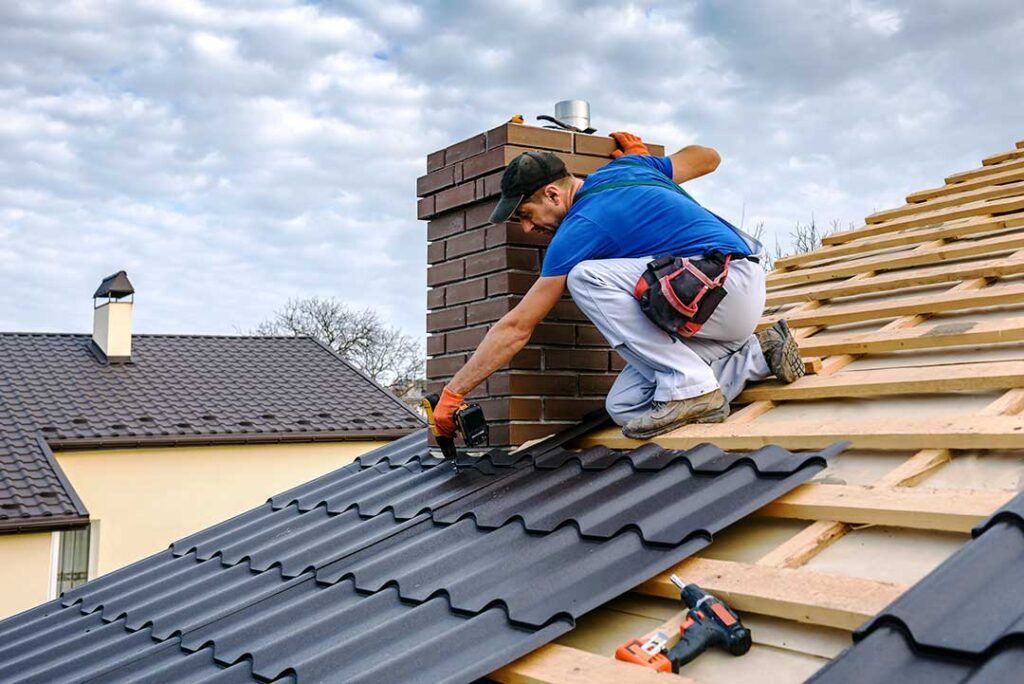
Is roof cleaning safe to do yourself?
Roof cleaning can be safe for a homeowner when the work is limited to low-risk tasks performed from the ground or a stable, properly positioned ladder. Climbing onto a roof, using a pressure washer, or handling strong cleaning chemicals creates hazards that are easy to underestimate.
In Clayton, NY, roof surfaces may remain damp from rain, snow, shade, or nearby trees. That moisture can make shingles, metal panels, and roof edges slippery. Seasonal temperature changes can also loosen roofing materials or make them brittle, especially after years of freeze-thaw exposure.
Before starting, determine whether the buildup is simply surface debris or a sign of a larger roofing problem. Moss, algae, staining, and leaves should not be treated in exactly the same way.
What should be checked before cleaning?
A short inspection helps determine whether cleaning is appropriate and whether the roof can be reached safely.
Look for:
- Missing, cracked, curled, or loose shingles
- Exposed underlayment or roofing nails
- Sagging areas
- Damaged flashing around chimneys, vents, and roof edges
- Soft or unstable gutter sections
- Heavy moss that has lifted shingles
- Ice, frost, standing water, or wet leaves
- Overhead branches and electrical hazards
Do not walk on a roof that appears damaged or unstable. A roof may support normal weather loads but still be unsafe for foot traffic. Asphalt shingles become particularly vulnerable when their protective surface has worn away.
If the roof cannot be inspected from the ground, binoculars can help identify problems without requiring a climb.
How can leaves and loose debris be removed safely?
Loose leaves, twigs, and pine needles are usually the simplest material to remove. Use a soft roof rake designed for the roofing type, or remove debris from the edge while standing on the ground. Work from a safe position and avoid dragging tools across shingles.
A leaf blower may be useful from a secure location, but blowing upward or across the roof can force debris beneath shingle edges. It can also scatter material into gutters, attic vents, windows, or neighboring areas.
For gutters, clear loose debris only when the ladder can rest on firm, level ground. Keep both feet on the ladder and avoid leaning sideways. A ladder stabilizer may reduce the chance of damaging gutters, but it does not make a steep or icy roof safe to access.
Never use a pressure washer to blast leaves from shingles. High-pressure water can remove granules, drive water beneath roofing materials, and shorten the roof’s service life.
What is the safest way to remove moss and algae?
Moss should be loosened gradually rather than scraped aggressively. Heavy scraping can lift shingle edges and remove protective granules. A soft-bristled brush may be used very gently on small areas, working downward in the same direction as water naturally flows.
Algae stains are often dark streaks caused by organic growth on the shingle surface. They may look unattractive but are not always causing immediate structural damage. Cleaning too aggressively can create more harm than the staining itself.
If a cleaning solution is appropriate for the roofing material, follow the product label exactly. Use only a method specifically identified as safe for that material. Protect plants, landscaping, siding, windows, and painted surfaces from runoff, and avoid cleaning before rain if the solution could wash into areas that should not receive it.
Do not mix cleaning chemicals. Combining products can produce dangerous vapors or unexpected reactions. Wear eye protection, gloves, long sleeves, and footwear with slip-resistant soles, and keep children and pets away from runoff.
Should a pressure washer be used on a roof?
Pressure washing is generally not a safe cleaning method for asphalt shingles. The force can strip away granules, damage seal strips, open seams, and push water into roof assemblies. Even metal roofing can be damaged if high pressure reaches fasteners, seams, coatings, or flashing.
Low-pressure rinsing may be suitable for some roof materials, but the correct pressure and cleaning method depend on the roof’s age, coating, slope, and condition. Clay, concrete, wood, slate, and metal roofs each have different limitations.
A garden hose with gentle flow is less aggressive than a pressure washer, but water should never be directed under shingle edges, flashing, vents, or siding. Water intrusion can appear inside the home long after the cleaning is finished.
What safety precautions matter most on a sloped roof?
The main risks are falls, unstable footing, falling tools, and contact with electrical equipment. A fall from even a single-story roof can cause serious injury.
Avoid roof access when:
- The surface is wet, icy, frosted, or covered with loose debris
- Wind is strong enough to affect balance
- The roof is steep or has multiple levels
- You are unfamiliar with roof-safety equipment
- The roofing material is fragile or visibly damaged
- The work requires reaching beyond a stable position
- You have no safe way to secure a ladder
Do not rely on ordinary athletic shoes, loose boards, or improvised ladder supports. A roof harness is only useful when properly selected, anchored, and used with appropriate training. An incorrectly installed anchor can fail or damage the roof.
If cleaning requires walking on the roof, handling chemicals above shoulder height, working near power lines, or reaching difficult roof sections, the safest choice is to avoid doing that portion personally.
How often should a roof be cleaned?
A roof does not need routine aggressive washing. Cleaning frequency depends on tree cover, roof slope, shade, moisture, nearby vegetation, and the type of roofing material.
A practical approach is to inspect the roof from the ground in spring and fall, particularly after heavy storms or periods of high wind. Remove leaves and branches before they trap moisture or block drainage. In the colder months, avoid disturbing snow or ice on a roof unless there is an urgent safety reason.
Homes surrounded by mature trees may need more frequent debris removal than homes with open exposure. However, frequent scrubbing is not necessarily better. Prevention through trimmed branches, clear gutters, and adequate roof ventilation can reduce recurring buildup.
When does roof growth signal a larger problem?
Moss or persistent dampness may indicate that a roof receives little sunlight or does not drain properly. It can also point to clogged gutters, overhanging branches, poor ventilation, or areas where water remains after rainfall.
In older homes, repeated moisture exposure can worsen hidden deterioration around flashing, roof edges, and penetrations. Look inside the attic for damp insulation, water staining, musty odors, or daylight visible through the roof deck.
Roof cleaning cannot repair leaks, replace missing shingles, correct sagging, or restore failed flashing. If those conditions are present, cleaning should wait until the underlying problem is evaluated. A clean roof is not necessarily a sound roof.
A safer cleaning plan for local households
For many residents, the lowest-risk plan is straightforward:
1. Inspect the roof from the ground.
2. Remove loose debris only from a secure location.
3. Keep ladders on firm, level surfaces.
4. Avoid pressure washing and aggressive scraping.
5. Use only roof-compatible cleaning methods.
6. Protect landscaping and control chemical runoff.
7. Stop immediately if the surface is wet, unstable, steep, or damaged.
8. Treat leaks, lifted materials, and structural concerns as separate roofing problems.
Clayton’s changing weather makes timing especially important. A dry, calm day with stable footing is safer than working immediately after rain, during freezing conditions, or before a storm. The goal is not to make every roof look new; it is to remove harmful debris without creating a fall hazard or damaging the roofing system.
